Skip to content

How Platelet-Rich Plasma Supports Hair Restoration
PRP Hair Treatment is one of the most popular non-surgical treatments for hair thinning and hair loss. The treatment uses growth factors from your own blood to support hair follicles and improve scalp health. Doctors and aesthetic practitioners use PRP to help reduce shedding, improve hair density and support stronger hair growth.
Hair loss affects both men and women. Genetics, hormones, ageing, stress, illness and nutritional deficiencies can all contribute to thinning hair. Many people notice a widening parting, reduced volume or increased shedding long before bald patches appear.
PRP Hair Treatment targets the biological processes that influence hair growth. Instead of covering up thinning hair, it supports the follicles responsible for producing it. For this reason, PRP has become a popular option for patients who want a natural and minimally invasive approach to hair restoration.
At our clinic, we use PRP Hair Treatment as part of a personalised hair restoration plan. We assess your scalp health, identify potential causes of hair loss and recommend treatments that match your goals and stage of hair loss.
What Is PRP Hair Treatment?
PRP stands for Platelet-Rich Plasma. PRP Hair Treatment uses a concentrated portion of your own blood that contains high levels of platelets and growth factors.
The procedure starts with a small blood sample. Your clinician takes the sample from your arm, similar to a routine blood test. The blood then enters a centrifuge, which separates and concentrates the platelet-rich plasma.
Platelets do much more than help blood clot. They contain growth factors that support tissue repair and cellular communication throughout the body. Medical professionals have used platelet-rich plasma for many years in sports medicine, orthopaedics and wound healing.
During PRP Hair Treatment, your clinician injects the concentrated plasma into targeted areas of the scalp. The growth factors then interact with cells surrounding the hair follicle. This process helps create a healthier environment for hair growth.
Because the treatment uses your own blood, the risk of allergic reaction remains extremely low. Most patients tolerate the procedure well and return to normal activities shortly afterwards.
How PRP Hair Treatment Works
Healthy hair follicles depend on oxygen, nutrients and cellular signalling. When these processes weaken, follicles produce thinner hairs and spend longer in resting phases. Over time, this can lead to visible thinning and reduced density.
PRP Hair Treatment delivers concentrated growth factors directly into affected areas of the scalp. After injection, platelets release signalling molecules that communicate with nearby cells. These growth factors support follicular activity and improve the environment surrounding the follicle.
Hair follicles require a strong blood supply to function effectively. Improved circulation helps deliver oxygen and nutrients to active follicles. Better blood flow can support healthier growth cycles and stronger hair production.
PRP may also encourage follicles to remain in the anagen phase for longer. The anagen phase represents the active growth stage of the hair cycle. Follicles that stay in this phase for longer periods can produce hair more consistently.
Research also links inflammation to several forms of hair loss. PRP can help support scalp health by reducing inflammatory signals around the follicle. A healthier scalp creates better conditions for long-term hair growth.
PRP Hair Treatment for Male and Female Pattern Hair Loss
Androgenetic alopecia remains the most common cause of hair loss worldwide. Doctors often refer to this condition as male pattern hair loss or female pattern hair loss.
In men, hair loss usually affects the temples, hairline and crown. In women, thinning commonly develops across the top of the scalp and around the parting. Although the pattern differs, the underlying process remains similar.
Over time, susceptible follicles shrink through a process called miniaturisation. Smaller follicles produce finer hairs. As miniaturisation progresses, hair density gradually decreases.
PRP Hair Treatment supports follicles before they become permanently inactive. The treatment helps improve follicular function and scalp health. As a result, existing hairs often appear thicker and stronger.
Patients usually achieve the best outcomes during the early and moderate stages of hair loss. Active follicles respond more effectively than follicles that have already disappeared. Early treatment often provides the greatest opportunity to preserve density and slow progression.
PRP Hair Treatment for Stress-Related Hair Loss
Stress can affect the hair growth cycle in several ways. Physical illness, emotional stress, surgery, hormonal changes and rapid weight loss can all trigger excessive shedding.
This type of shedding often occurs through a condition called telogen effluvium. The condition causes large numbers of follicles to enter the resting phase at the same time. Several months later, increased shedding becomes noticeable.
Unlike pattern hair loss, telogen effluvium does not usually shrink the follicle itself. Instead, the follicle temporarily pauses active growth.
PRP Hair Treatment can support recovery by improving the environment around the follicle. Growth factors encourage healthy follicular activity and support the return to normal growth cycles.
Many patients combine PRP with lifestyle changes and treatment of the underlying trigger. This approach often provides the strongest foundation for long-term recovery.
Why Hair Appears Thicker After PRP Hair Treatment
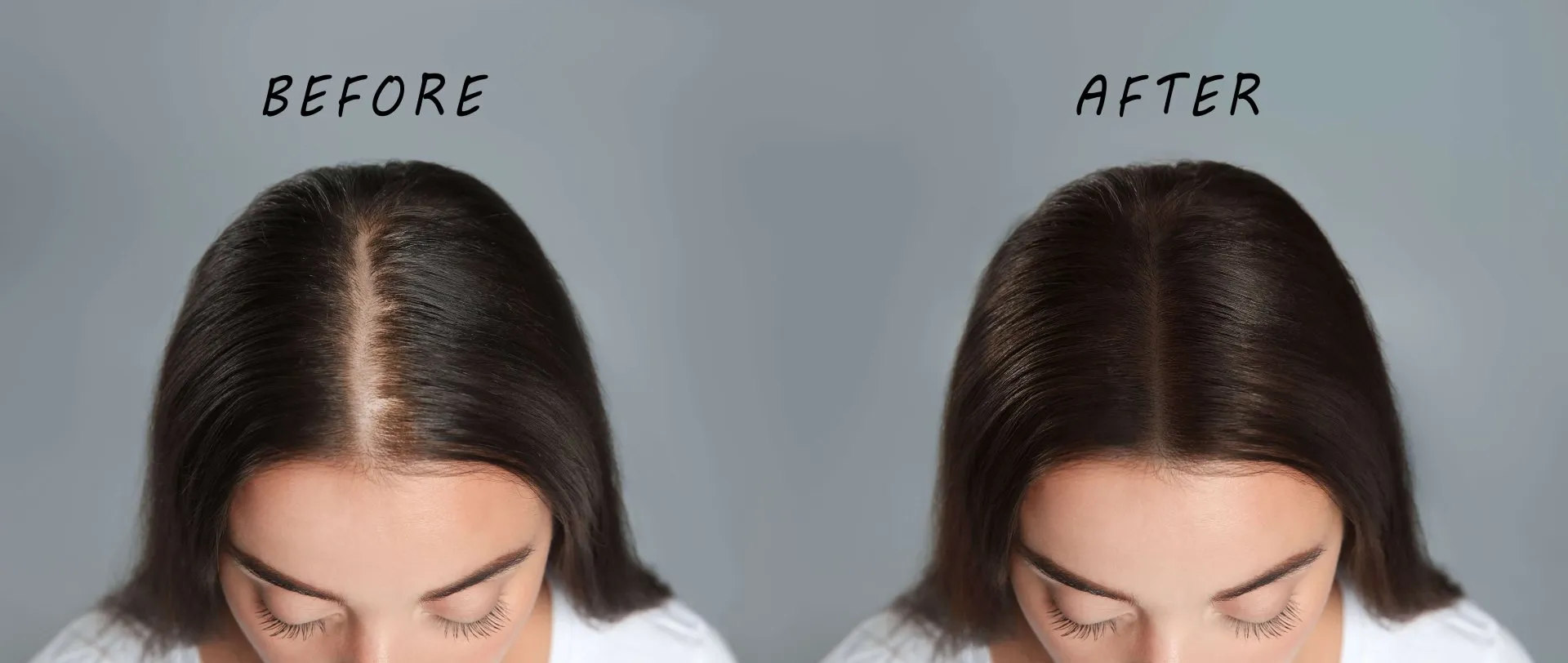
Many patients notice fuller-looking hair after treatment. This improvement often results from several changes occurring at the same time.
First, PRP Hair Treatment can improve the thickness of individual hair shafts. Even small increases in diameter can make hair appear noticeably denser.
Second, PRP can reduce excessive shedding. When more hairs remain in the growth phase, overall density improves. Hair often appears fuller even before significant regrowth occurs.
Third, healthier follicles tend to produce stronger hairs. Improved hair quality can enhance texture, resilience and shine.
These combined effects create a visible improvement in overall hair appearance. Many patients report that their hair feels healthier and becomes easier to manage after treatment.
What Happens During a PRP Hair Treatment Session?
A typical PRP Hair Treatment session takes less than one hour.
Your appointment begins with a blood draw. Your clinician collects a small blood sample and places it into specialised tubes. The sample then enters a centrifuge, which concentrates the platelet-rich plasma.
Once prepared, your clinician injects the PRP into areas affected by thinning hair. The treatment plan determines the number and location of injections.
Most patients tolerate the procedure well. You may experience mild discomfort during treatment, but most people find it manageable.
After treatment, the scalp may feel tender for a short period. Some patients notice mild redness or swelling. These effects usually settle quickly and rarely interfere with daily activities.
When Will You See Results?
PRP Hair Treatment works gradually. Hair growth follows natural biological cycles, so visible improvements take time.
Many patients notice reduced shedding within the first few weeks or months. This often provides the first sign that the follicles are responding to treatment.
Most improvements in density and thickness develop between three and six months after treatment begins. During this period, follicles complete new growth cycles and produce stronger hairs.
Results vary between individuals. Age, genetics, scalp health and the type of hair loss all influence outcomes. Patients who start treatment earlier often achieve stronger results than those with advanced hair loss.
How Many PRP Hair Treatment Sessions Are Needed?
Most patients require a course of treatments rather than a single session.
Many treatment plans include three to four sessions spaced four to six weeks apart. This schedule provides repeated stimulation during the early stages of treatment.
After the initial course, maintenance sessions help support long-term results. The ideal schedule varies between patients and depends on the cause of hair loss.
Hair loss often progresses over time. Regular maintenance treatments can help preserve gains and support ongoing follicular health.
During your consultation, we will recommend a treatment schedule based on your individual needs and goals.
Is PRP Hair Treatment Right for You?
PRP Hair Treatment may suit individuals with early or moderate hair thinning. It can benefit patients with pattern hair loss, stress-related shedding and some forms of diffuse thinning.
The treatment works best when active follicles remain present within the scalp. Follicles need enough biological activity to respond to the growth factors contained within PRP.
Patients with advanced baldness may require alternative treatment options. In these situations, PRP may provide limited benefit because many follicles no longer remain active.
A detailed consultation allows us to assess your scalp, review your medical history and identify the cause of your hair loss. We can then determine whether PRP Hair Treatment fits your goals and expectations.
Our Clinical Approach
We begin every PRP Hair Treatment with a comprehensive assessment. We evaluate your scalp, hair density, medical history and pattern of hair loss before recommending treatment.
Our team focuses on evidence-based care and realistic expectations. We create personalised treatment plans that reflect your individual needs rather than using a one-size-fits-all approach.
Hair restoration requires consistency and long-term planning. We monitor your progress throughout treatment and adjust recommendations when necessary.
Our goal is to support follicular health, improve hair quality and help you achieve sustainable results.
Take the Next Step
Hair thinning rarely improves without addressing the underlying cause. Early intervention gives you the best opportunity to preserve existing hair and support healthy growth.
If you have noticed increased shedding, reduced density or visible thinning, a professional assessment can help identify the cause. We can evaluate your scalp health and discuss the treatment options available to you.
Book a consultation today to learn whether PRP Hair Treatment could become part of your personalised hair restoration plan.