Skip to content


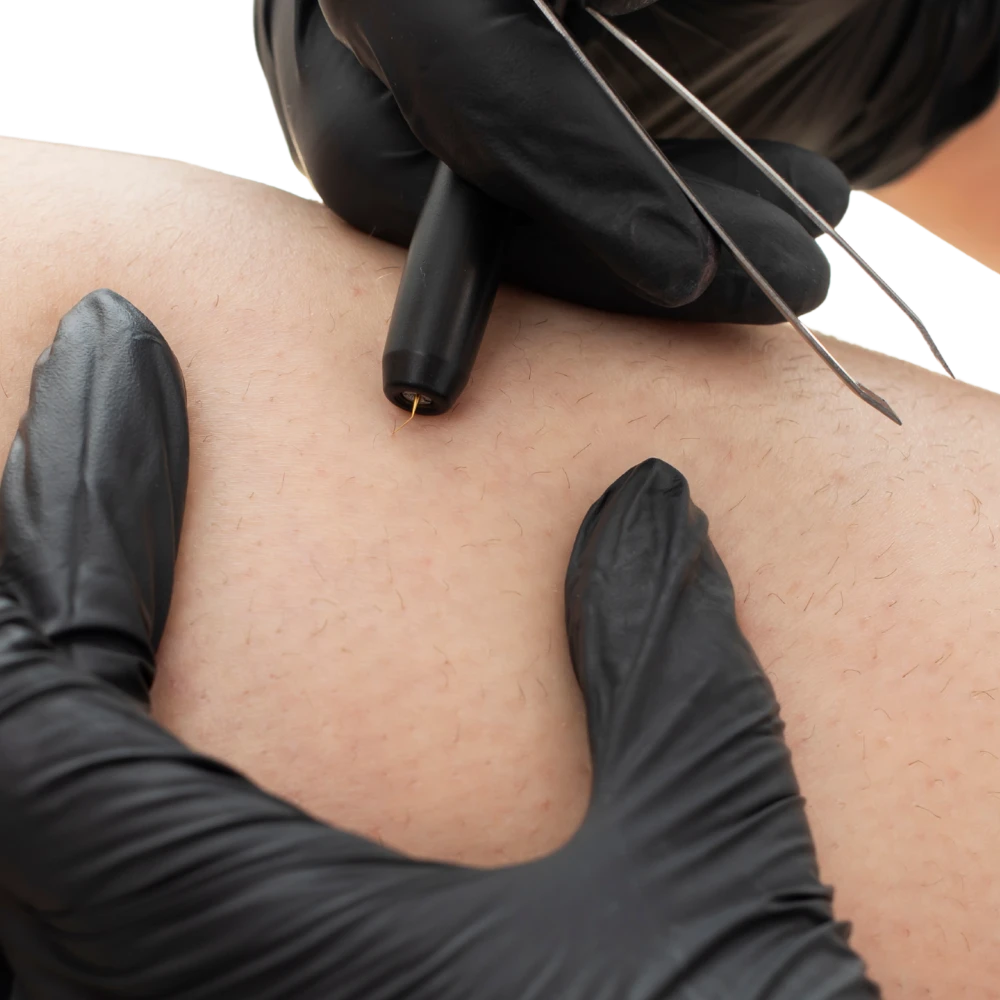
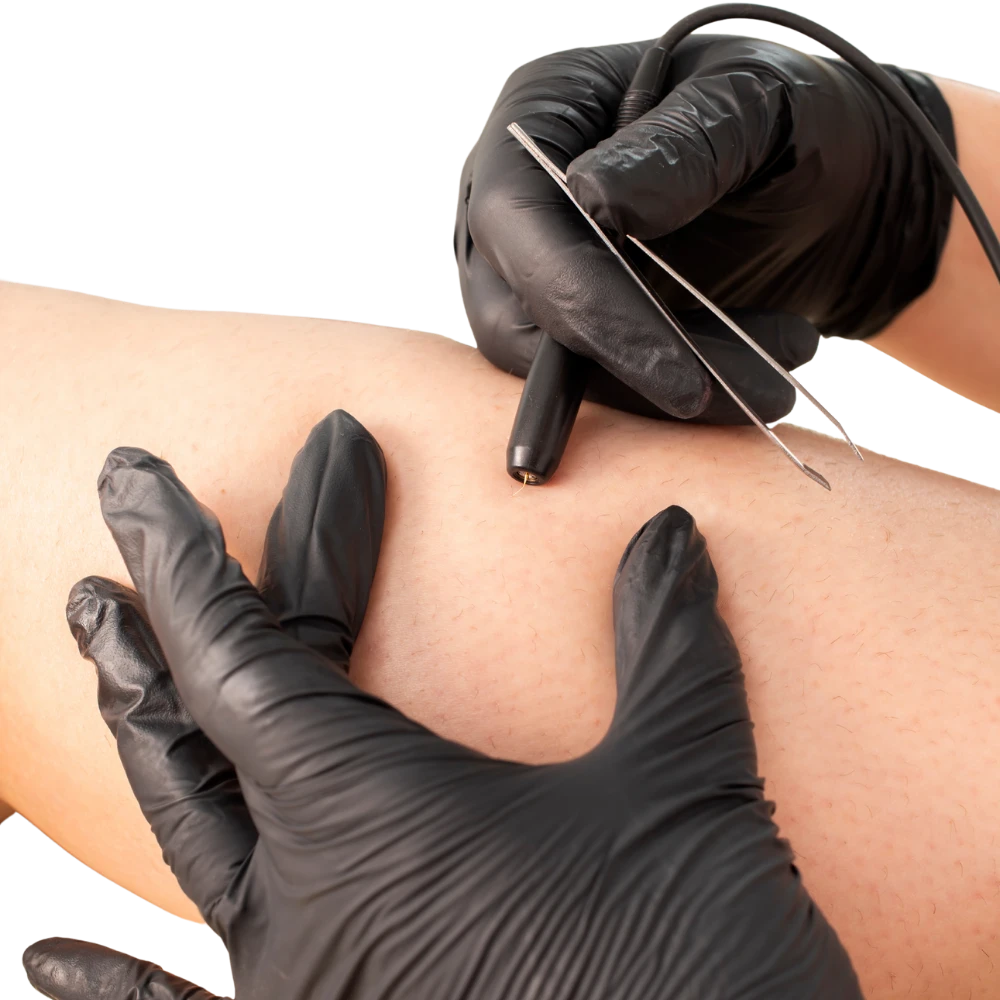
Unwanted hair can appear anywhere on the face or body and often becomes more noticeable with age, hormonal changes or genetic predisposition. While laser hair removal reduces hair growth effectively, it works best on dark hair. Many people are therefore left with stubborn hairs that laser cannot treat. Electrolysis is widely recognised as the only permanent method of hair removal because the hair follicle is permanently destroyed. During treatment, a fine probe is inserted into the follicle and a controlled electrical current is delivered to disable the follicle’s ability to produce hair. At Continental Skin Clinic in London, electrolysis is used to permanently remove individual unwanted hairs with precision and control. The treatment is suitable for all hair colours, including grey, white, red and blonde hairs that cannot be treated with laser.
What Areas Can Electrolysis Treat?
Electrolysis is ideal for small or delicate areas where permanent removal of individual hairs is required.
Common treatment areas include:
- Chin and upper lip
- Jawline and sideburns
- Around nipples
- Fingers and toes Navel line
- Bikini line
- Underarms
- Top of cheek
- Nose and ear lobes
- Stray facial hairs
- Beard shaping for men
Because each follicle is treated individually, electrolysis is especially useful for precision hair removal and for removing persistent hairs that remain after laser hair removal.
Why Electrolysis Is Different from Laser Hair Removal
Laser hair removal works by targeting pigment within the hair. As a result, it cannot treat hairs that lack pigment. Electrolysis, however, targets the hair follicle itself, which means the colour of the hair does not matter. Grey, white, blonde and red hairs can therefore be permanently removed.
Electrolysis is particularly recommended for:
- Light-coloured facial hair
- Hormonal hairs on the chin or jawline
- Stray hairs that remain after laser hair removal
- Ingrown hairs that repeatedly return
- For larger areas of thick hair growth, laser hair removal is usually more efficient and cost-effective. Electrolysis is therefore best used for smaller areas requiring precision.
Electrolysis for Ingrown Hairs
Ingrown hairs occur when hair becomes trapped beneath the skin, causing inflammation, pigmentation and discomfort. Repeated shaving, waxing or plucking can make the problem worse. Electrolysis permanently destroys the follicle responsible for the ingrown hair. Once treated, that follicle can no longer produce hair, which helps prevent future ingrown hairs and irritation.
Who Is Electrolysis Suitable For?
Electrolysis is suitable for most clients who want permanent removal of unwanted hair.
It is particularly beneficial if you:
- Have grey, white or blonde hair
- Experience persistent ingrown hairs
- Want permanent removal of stray facial hairs
- Need precise hair removal in delicate areas
- Want beard shaping without laser treatment
- Have completed laser hair removal but still have remaining hairs
Electrolysis and PCOS
Hormonal conditions such as PCOS can stimulate new hair growth over time. In these cases, electrolysis can still remove existing hairs permanently, although maintenance treatments may occasionally be required.
What to Expect During Treatment
Each hair follicle is treated individually using a sterile probe. The sensation is usually mild and tolerable, although sensitivity varies depending on the area treated. Sessions are tailored according to the number of hairs present and the treatment area. Because hair grows in cycles, several sessions are typically required to treat follicles as they enter the active growth phase. Over time, treated hairs stop returning, leaving the skin smoother and clearer.