Skip to content

A Smarter Approach to Hair Restoration
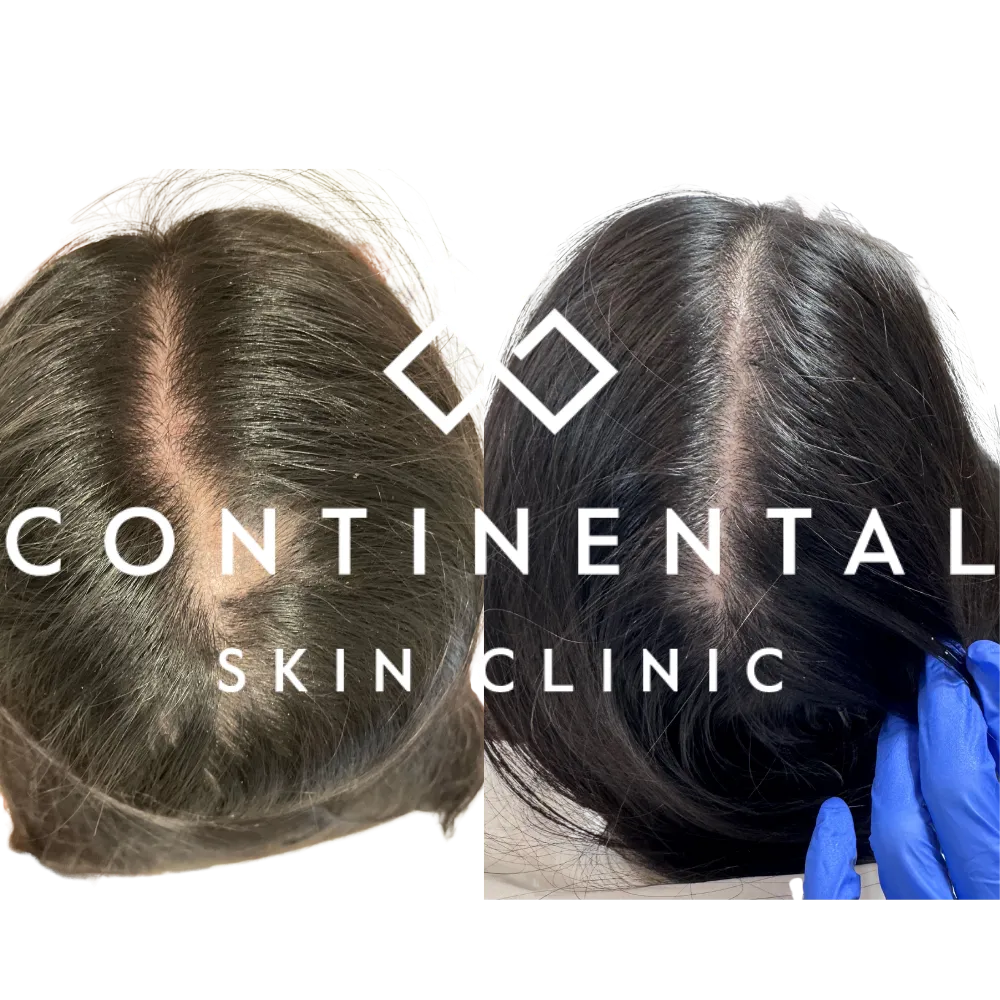
Exosomes Hair Regeneration is transforming the way practitioners approach hair thinning and hair loss. Rather than focusing solely on stimulating new hair growth, this treatment aims to improve the biological environment surrounding the hair follicle. Healthy hair depends on healthy follicles, and healthy follicles depend on effective cellular communication, adequate blood supply, balanced inflammation, and a supportive scalp environment.
Hair thinning is rarely caused by a single factor. Genetics, hormonal changes, ageing, stress, inflammation, nutritional deficiencies, and certain medical conditions can all influence how well hair follicles function. Over time, these influences can weaken follicle activity, shorten growth cycles, and reduce the quality of the hair being produced. As a result, hair may become finer, density may decrease, and shedding may become more noticeable.
Exosomes Hair Regeneration combines regenerative exosome technology with laser-assisted delivery to help support follicular health at a deeper level. By targeting the scalp environment where hair growth begins, treatment focuses on creating conditions that are more favourable for stronger, healthier hair over time.
Understanding Why Hair Thins
Every hair follicle follows a natural growth cycle consisting of growth, transition, and resting phases. In a healthy scalp, most follicles remain in the growth phase for several years before naturally shedding and beginning a new cycle.
When follicles become affected by inflammation, hormonal influences, or reduced cellular activity, this cycle can become disrupted. Growth phases may shorten, resting phases may lengthen, and newly produced hairs may emerge thinner than before. This gradual process, known as follicular miniaturisation, is responsible for many common forms of hair thinning.
What many people do not realise is that these changes often begin long before visible hair loss occurs. By the time thinning becomes obvious, follicles may have been under biological stress for months or even years.
For this reason, modern hair restoration increasingly focuses on improving follicle function and scalp health rather than simply attempting to stimulate hair growth from the surface.
The Problem With Topical Hair Products
The market is filled with shampoos, serums, oils, and scalp treatments claiming to improve hair growth. While some ingredients may have scientific support, one major challenge remains: delivery.
The scalp is designed to act as a protective barrier. Its primary role is to prevent foreign substances from entering the body. While this protection is beneficial, it also limits the penetration of many hair growth ingredients.
Even when a product contains beneficial active ingredients, much of it remains within the superficial layers of the scalp. As a result, only a limited amount may reach the structures surrounding the hair follicle.
This is one reason why many people use topical treatments consistently yet achieve only modest improvements. The challenge is often not the ingredient itself, but getting that ingredient to the area where it can have the greatest impact.
What Are Exosomes?
Exosomes are microscopic extracellular vesicles naturally released by cells throughout the body. They function as biological messengers, carrying proteins, peptides, growth factors, lipids, and signalling molecules between cells.
Their role is communication.
Rather than becoming new cells themselves, exosomes help coordinate cellular activity by delivering instructions from one cell to another. This process plays an important role in tissue repair, regeneration, wound healing, and normal biological function.
In regenerative medicine, exosomes have attracted considerable attention because of their ability to influence cellular behaviour without requiring cell transplantation.
When applied within hair restoration, exosomes are used to support the environment surrounding the follicle. This may help improve the conditions necessary for healthy hair growth and normal follicular function.
Why Delivery Is Critical
The effectiveness of any regenerative treatment depends heavily on delivery.
Applying exosomes directly to an intact scalp may limit their ability to reach the deeper structures surrounding the follicle. The scalp barrier can significantly reduce penetration, preventing optimal exposure to the target tissues.
This is why many practitioners combine exosomes with technologies designed to enhance absorption.
At Continental Skin Clinic, exosomes are delivered using laser-assisted technology to improve penetration and maximise contact with the follicular environment.
How Thulium Laser Technology Supports Hair Regeneration
Thulium laser technology creates thousands of microscopic treatment channels across the scalp. These channels are highly controlled and uniformly distributed, allowing regenerative ingredients to pass through the scalp barrier more effectively.
This process serves two important purposes.
Firstly, it improves the delivery of exosomes into the areas surrounding the hair follicles. Rather than remaining on the surface, exosomes can access deeper tissues where cellular communication and follicular activity occur.
Secondly, the laser itself stimulates a controlled healing response within the scalp. This response encourages increased cellular activity, improved circulation, and scalp renewal.
The combination of regenerative signalling and laser stimulation creates a treatment that supports both scalp health and follicular function simultaneously.
Why Laser-Assisted Delivery Differs From Microneedling
Microneedling is often used within hair restoration because it creates pathways that can improve product absorption. However, treatment depth and coverage may vary depending on technique, needle pressure, device quality, and operator experience.
Laser-assisted delivery offers a more controlled approach.
The channels created by thulium laser technology are precise, consistent, and evenly distributed across the treatment area. This creates predictable coverage while reducing unnecessary trauma to surrounding tissue.
Because the treatment remains highly controlled, many patients experience minimal downtime while still benefiting from enhanced delivery of regenerative ingredients.
Potential Benefits of Exosomes Hair Regeneration
Exosomes Hair Regeneration focuses on improving the scalp environment rather than creating an artificial cosmetic effect.
Many patients choose treatment because they want to support the health and longevity of existing hair follicles. By creating a healthier follicular environment, treatment may help support stronger hair growth over time.
Potential benefits may include reduced shedding, improved scalp quality, increased hair strength, improved texture, and greater overall density. Some patients also notice that their hair appears healthier and feels thicker as treatment progresses.
Because the treatment works with the biology of the follicle, improvements typically develop gradually and naturally.
What To Expect During Exosomes Hair Regeneration Treatment
Treatment begins with a detailed consultation and scalp assessment. Understanding the cause of hair thinning is important when determining whether Exosomes Hair Regeneration is appropriate.
During the procedure, the scalp is cleansed before thulium laser technology is used to create controlled micro-channels across the treatment area. Exosomes are then applied, allowing them to utilise these channels for enhanced penetration.
The procedure is generally well tolerated and requires minimal downtime. Most patients can resume normal daily activities shortly afterwards.
When Will Results Become Visible?
Hair growth is a slow biological process. Unlike cosmetic treatments that provide immediate visible changes, regenerative hair treatments require time.
Many patients notice changes in scalp quality and reduced shedding before observing improvements in density. Visible changes often develop gradually over several months as follicles progress through their natural growth cycles.
Because hair regeneration depends on biological processes, consistency and realistic expectations are essential. Your practitioner will advise on the number of sessions that may be appropriate for your individual concerns.
Who Is Suitable For Exosomes Hair Regeneration?
Exosomes Hair Regeneration may be suitable for men and women experiencing early to moderate hair thinning, increased shedding, reduced density, or age-related changes in hair quality.
It is particularly appealing to individuals seeking a non-surgical treatment that focuses on supporting follicular health rather than simply masking hair loss.
A consultation allows your practitioner to assess your scalp, discuss your concerns, and determine whether treatment is suitable for your specific pattern of hair loss.
Supporting Hair Growth From The Source
Healthy hair begins with healthy follicles. While many treatments focus on the visible hair shaft, Exosomes Hair Regeneration targets the biological environment where hair growth originates.
By combining regenerative exosomes with precision laser-assisted delivery, treatment aims to support follicular function, improve scalp health, and create conditions that are more favourable for stronger, healthier hair over time.
If you are concerned about thinning hair, increased shedding, or declining hair density, a consultation can help determine whether Exosomes Hair Regeneration could form part of your long-term hair restoration strategy.