
Fractional CO₂ vs Fully Ablative
Understanding the Difference and Which Option Suits Your Skin
When comparing fractional CO₂ vs fully ablative resurfacing, many patients assume they are simply stronger or weaker versions of the same treatment. In reality, they behave very differently within the skin.
Both treatments use carbon dioxide laser energy to resurface damaged skin and stimulate collagen production. However, the way they deliver energy, the amount of tissue they affect, the recovery period involved, and the overall risk profile vary significantly.
Understanding these differences matters because resurfacing treatments are not only about results. They are also about healing behaviour, skin tone compatibility, inflammation control, and long-term skin quality.
At Continental Skin Clinic London, treatment selection is based on balancing efficacy with safety. Some patients benefit from more aggressive resurfacing, while others achieve better outcomes through controlled fractional treatment with lower downtime and lower complication risk.
The right option depends on:
- Skin tone
- Severity of damage
- Acne scarring depth
- Wrinkle severity
- Pigmentation risk
- Healing capacity
- Downtime tolerance
- Previous treatment history
Modern laser resurfacing increasingly prioritises controlled collagen remodelling over aggressive tissue removal. This is one of the reasons fractional CO₂ technology has become significantly more common in contemporary aesthetic practice.
What Fully Ablative CO₂ Resurfacing Does
Fully ablative CO₂ resurfacing removes the entire surface layer of skin across the treated area in a single session. The laser vaporises tissue continuously rather than leaving untreated zones between areas of injury.
This creates a powerful wound-healing response.
As the skin repairs itself, collagen production increases and damaged surface tissue is replaced with newer, smoother skin. Historically, fully ablative resurfacing was considered one of the most aggressive and effective approaches for severe photoageing and extensive wrinkles or folds.
It can produce dramatic improvement in:
- Deep wrinkles
- Advanced sun damage
- Significant skin ageing
- Severe textural irregularities
- Deep acne scarring
- Some surgical scar patterns
However, these stronger results come at the cost of substantially greater recovery and risk.
Because the full epidermal surface is removed, healing is slower and more demanding on the skin barrier.
Patients undergoing fully ablative resurfacing often experience:
- Significant redness
- Swelling
- Oozing
- Crusting
- Tightness
- Prolonged sensitivity
Recovery may take several weeks initially, while residual redness can persist for months in some patients.
Why Fully Ablative CO₂ Carries Higher Risk
The aggressive nature of fully ablative resurfacing increases the likelihood of complications, particularly in patients with higher Fitzpatrick skin types.
One of the most important concerns is post-inflammatory hyperpigmentation (PIH). Excess inflammation can stimulate melanocytes, leading to persistent darkening after treatment.
The risk becomes greater in:
- Fitzpatrick IV
- Fitzpatrick V
- Fitzpatrick VI
Patients with darker skin tones naturally produce more reactive melanocyte responses during wound healing. Aggressive resurfacing therefore requires extremely careful patient selection and preparation.
Fully ablative resurfacing also carries increased risk of:
- Infection
- Persistent erythema
- Delayed healing
- Scarring
- Texture irregularities
- Pigment loss
For this reason, modern aesthetic medicine uses fully ablative CO₂ far less frequently than in previous decades.
While it still has a role in carefully selected patients with severe ageing or advanced photodamage, clinicians increasingly favour approaches that deliver meaningful collagen stimulation with lower inflammatory burden.
What Fractional CO₂ Does Differently
Fractional CO₂ resurfacing was developed to improve the balance between efficacy and recovery.
Rather than removing the entire surface layer continuously, fractional systems create microscopic treatment zones known as micro-ablative columns. Tiny columns of tissue are treated while surrounding tissue remains intact.
Because healthy skin remains between treated zones, the skin can repair itself more efficiently and rapidly. Untreated tissue acts as a reservoir for recovery, accelerating re-epithelialisation and reducing overall downtime.
Fractional technology therefore delivers controlled injury rather than complete surface removal.
The result is collagen stimulation and resurfacing with a more manageable recovery process.
Fractional CO₂ systems are commonly used for:
- Acne scarring
- Fine lines
- Enlarged pores
- Uneven texture
- Mild to moderate laxity
- Photoageing
- Surgical scars
- Pigmentation irregularities
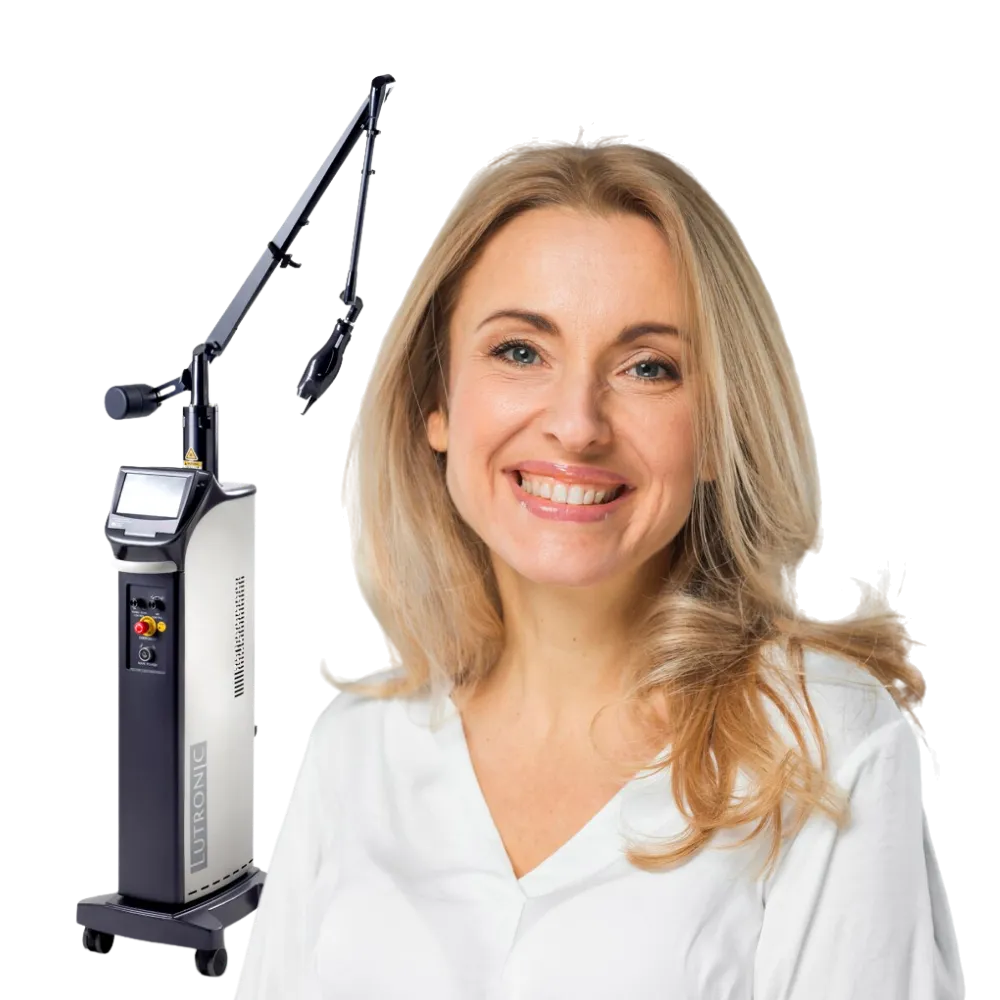
The Lutronic eCO2 system, for example, uses fractional technology to create microscopic columns while preserving surrounding tissue, helping support faster healing and reduced downtime.
How Fractional CO₂ Stimulates Collagen
Fractional resurfacing works through controlled thermal injury.
As microscopic columns are created, the body initiates a wound-healing cascade involving fibroblast activation, collagen synthesis, elastin remodelling, cellular turnover and tissue regeneration.
Collagen remodelling continues progressively for several months after treatment. Patients often notice gradual improvement in skin quality over time rather than an immediate transformation.
Clinical resurfacing systems frequently combine resurfacing with deeper collagen stimulation to improve skin firmness, surface texture, scar depth, fine lines and elasticity.
Because treatment intensity can be adjusted, fractional CO₂ is highly adaptable across different concerns and skin types.
The treatment can also be layered progressively over time. Rather than aggressively removing the entire surface in one session, clinicians can tailor the density and energy settings according to skin tolerance and healing behaviour. This creates a more controlled treatment pathway, particularly for patients who are cautious about downtime or pigmentation risk.
Many patients also prefer the progressive nature of fractional resurfacing because results develop more naturally. Skin quality gradually improves over several months as collagen remodels beneath the surface. Instead of looking abruptly “treated,” the skin often appears smoother, firmer and healthier over time.
Fractional CO₂ and Darker Skin Tones
One of the most important advantages of fractional technology is improved safety across a broader range of skin tones.
This does not mean all fractional treatments are automatically safe for every patient. However, because fractional systems preserve portions of intact tissue and reduce overall inflammatory burden, they generally create a safer healing environment compared with fully ablative resurfacing.
Careful protocol design remains essential.
This includes:
- Conservative settings
- Appropriate treatment density
- Pre-treatment skin preparation
- Pigment suppression when indicated
- Strict aftercare
- Sun avoidance
- Inflammation control
When performed correctly, fractional CO₂ can often be used successfully in Fitzpatrick IV to VI patients with significantly lower risk compared with traditional fully ablative resurfacing.
This is especially important in patients with a history of pigmentation, melasma, or post-inflammatory hyperpigmentation following previous procedures. In these cases, inflammation management becomes just as important as the resurfacing itself.
Modern clinics increasingly focus on controlled stimulation rather than maximum aggression. The goal is improving skin function and structure while minimising unnecessary trauma that could compromise healing or trigger pigment complications.
Fractional CO₂ vs Fully Ablative: Downtime
Recovery time is often the deciding factor for patients comparing fractional CO₂ vs fully ablative resurfacing.
Fully Ablative Recovery
Fully ablative resurfacing typically involves:
- Significant swelling
- Raw or exposed skin
- Oozing and crusting
- Longer wound care protocols
- Extended social downtime
Initial recovery may take several weeks, while residual redness can remain visible for months.
Patients often require intensive aftercare and strict avoidance of heat, exercise, sun exposure and irritation during healing. Because the skin barrier is heavily disrupted, infection prevention and wound care become extremely important during the recovery period.
Fractional CO₂ Recovery
Fractional resurfacing generally produces:
- Redness
- Mild to moderate swelling
- Dryness
- Flaking or peeling
Most patients experience recovery over several days rather than several weeks, although this varies depending on treatment intensity.
Because collagen remodelling continues beneath the surface, improvements continue gradually after healing has completed.
Many patients return to normal daily activities more quickly following fractional treatments, making them easier to integrate into work and social schedules.
Fractional CO₂ vs Fully Ablative: Results
Both treatments improve skin quality, but they do so through different levels of aggression.
Fully ablative resurfacing may produce stronger single-session correction in severe cases involving deep etched lines and extensive photodamage. However, this comes with substantially greater downtime and risk.
Fractional CO₂ focuses on controlled progressive improvement.
Patients often see significant improvement in:
- Acne scars
- Fine lines
- Texture
- Pore size
- Mild laxity
- Pigment irregularities
Results typically appear more gradual and natural because collagen remodelling develops progressively over several months.
Many clinicians now favour staged collagen stimulation rather than highly aggressive single-session resurfacing because it creates a better balance between outcomes and safety.
Additionally, treatment goals also influence which approach is more appropriate. Some patients prioritise maximum correction in the shortest possible time, while others prioritise lower downtime, lower risk and a more gradual recovery process. Neither preference is wrong, but understanding the trade-offs is essential before committing to treatment. The best resurfacing outcomes usually come from matching the treatment intensity to the patient’s skin behaviour, lifestyle and ability to follow aftercare correctly. Aggressive treatments can produce impressive results, but only when healing capacity, skin tone and risk tolerance are properly considered beforehand.
Which Option Suits Most Patients?
For most individuals, fractional CO₂ offers the stronger overall risk-to-reward balance.
It provides meaningful resurfacing and collagen stimulation while maintaining:
- More manageable downtime
- Lower pigment risk
- Faster healing
- Better adaptability across skin tones
Patients seeking improvement in acne scarring, texture, pores, early ageing or mild laxity often achieve substantial results without the prolonged recovery associated with fully ablative resurfacing.
Fully ablative CO₂ may still benefit a narrower group of patients with severe skin ageing who fully understand and accept the recovery process and higher risk profile.
The correct treatment should always follow a detailed consultation assessing:
- Skin type
- Pigmentation risk
- Scar severity
- Healing behaviour
- Previous treatments
- Lifestyle factors
- Downtime tolerance
At Continental Skin Clinic London, treatment planning focuses not simply on aggressive correction, but on achieving meaningful long-term skin improvement while protecting barrier integrity and minimising unnecessary inflammatory complications.