Skip to content

Cosmetic Camouflage vs Skin Repair
A long-term approach to lip pigmentation and visible concerns
If you are exploring semi-permanent make-up (SPMU), you are likely looking for a way to improve visible pigmentation, definition or asymmetry. That makes sense. However, how a concern is managed matters just as much as how it looks in the short term.
At our London clinic, we focus on long-term skin repair and regeneration. Rather than covering concerns, we work to improve the quality, colour and behaviour of the skin itself. This distinction becomes especially important when considering options such as SPMU, medical camouflage, or a clinical lip hyperpigmentation treatment that addresses melanin activity directly rather than masking it.
Below, you will find a clear explanation of what these procedures involve, their limitations and risks, and why many clients ultimately choose corrective skin treatments instead.
What Is Semi-Permanent Make-Up (SPMU)?
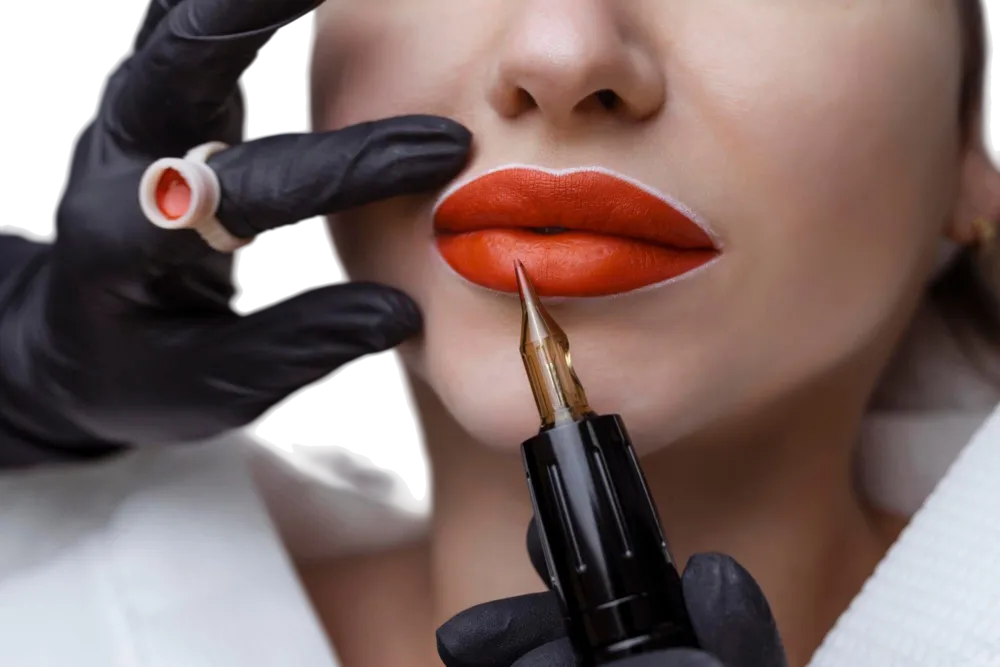
Semi-permanent make-up uses fine needles to implant pigment into the upper layers of the skin. It is commonly used to define brows, lips or the lash line.
Many people choose SPMU to reduce daily make-up use or to add colour where pigmentation appears faded. However, the result relies entirely on implanted pigment rather than changes in skin health.
Is SPMU the same as a tattoo?
SPMU and tattooing use similar techniques, but pigment depth differs. Tattoos sit deeper and remain permanent. SPMU sits more superficially and fades over time, so regular top-ups are often required.
How SPMU Heals and Changes Over Time
You usually begin with a colour-matching consultation and patch test. The pigment often looks stronger immediately after treatment. Over the next four to six weeks, the colour softens as the skin heals.
However, pigment behaviour changes over time. Exposure to sunlight, active skincare, hormonal shifts and skin regeneration can alter how pigment appears.
In many cases, pigments fade unevenly or oxidise. Oxidation can cause colours to shift toward grey, blue or dull brown tones. Once this happens, correction becomes difficult.
Benefits of Semi-Permanent Make-Up
SPMU can offer visible definition and convenience. For some people, it provides a temporary confidence boost.
Potential benefits include:
- Defined brows, lips or lash line
- Reduced reliance on daily make-up
- Visual improvement for asymmetry or colour loss
However, these benefits remain cosmetic. The underlying skin concern remains unchanged.
Risks and Limitations You Should Consider
SPMU requires careful consideration because reversal is slow and complex.
Common risks and limitations include:
- Pigment oxidation and colour shift over time
- Uneven fading or blurred edges
- Temporary swelling, dryness or crusting during healing
- Difficulty removing unwanted pigment, often requiring multiple laser sessions
- Strict aftercare requirements
- Coverage of concerns rather than correction
Once pigment sits in the skin, you commit to its behaviour. If the result no longer suits you, removal can take months or years.
Medical Camouflage and Micropigmentation
Medical camouflage uses pigment to blend scars, stretch marks or pigment loss conditions such as vitiligo. It is often considered when skin treatments can no longer improve the area.
What medical camouflage can do
- Reduce contrast between scar tissue and surrounding skin
- Restore the appearance of anatomical features, such as areolas
- Support confidence following surgery or trauma
What it cannot do
Medical camouflage does not change texture, collagen quality or skin function. Pigment may still appear visible under certain lighting, and colour can shift with sun exposure.
Again, this approach masks rather than repairs.
Semi-Permanent Make-Up for Vitiligo and Lip Pigment Loss
When colour change is biological
Some pigment concerns are medical rather than cosmetic. Vitiligo, for example, involves disrupted melanocyte activity rather than surface colour loss.
For lip vitiligo or hypopigmentation, cosmetic camouflage may appear to offer a quick solution. However, implanted pigment does not respond to the skin’s biology and may fade or shift unpredictably over time.
At our London clinic, we offer laser-based treatments designed to stimulate pigment activity in suitable cases. Rather than masking colour loss, this approach aims to support repigmentation by encouraging the skin’s own repair processes.
Results vary depending on stability, location and individual response. For that reason, suitability is always assessed during consultation, with realistic expectations clearly explained.
Why We Focus on Skin Repair Instead
At our London clinic, we prioritise treatments that improve skin quality from within. This approach supports more natural, adaptable and future-safe results.
Rather than implanting pigment, we work to restore clarity, tone and structure through regenerative treatments.
Our Approach to Lip and Skin Concerns
For concerns often addressed with SPMU, such as uneven lip colour or dull pigmentation, we offer treatments that help improve the skin itself.
Lip treatments that support repair
- Lip injections to restore hydration, structure and softness
- Laser lip pigmentation treatments to help brighten and even tone
- Barrier-supportive skin protocols designed for sensitive tissue
These treatments aim to improve circulation, stimulate renewal and support healthier pigmentation patterns. As a result, improvements adapt with your skin over time rather than fading unpredictably.
ToneTX™
Our signature treatment for lip tone and perioral rejuvenation
ToneTX™ is our advanced, skin-repair–focused treatment for dull, dehydrated or uneven lips, as well as early signs of ageing around the mouth.
This protocol combines laser lip brightening, gentle perioral resurfacing and regenerative infusion. Together, these steps help smooth texture, improve colour uniformity and support healthier lip tissue.
We use controlled laser energy to refresh the lip surface and stimulate collagen around the mouth. Using laser-assisted delivery, tranexamic acid is infused to help calm inflammation and restore clarity. Injectable skin boosters are then used to deeply hydrate the lips and soften fine perioral lines.
Rather than masking colour, ToneTX™ supports clearer tone, improved softness and long-term moisture retention.
Why ToneTX™ Instead of SPMU for Lips
SPMU relies on implanted pigment, which can fade unevenly or oxidise as the skin changes. ToneTX™ focuses on improving the skin itself, so colour and texture improve through regeneration rather than coverage.
This approach offers a more natural, adaptable and future-safe result for many clients.
Brows: Cosmetic Tattooing vs Hair Regeneration
SPMU eyebrows are commonly chosen after years of over-plucking, waxing or hormonal hair thinning. While tattooing can recreate the appearance of brows, it does not address why hair loss occurred.
Over time, brow pigments may blur, fade or change tone as skin quality evolves. This can limit flexibility and make future correction more complex.
Where brow thinning is present, we first assess whether natural regrowth remains possible.
At our London clinic, we focus on hair-supportive and regenerative approaches where appropriate. This may include hair-stimulating treatments, thulium laser technology and regenerative therapies designed to support follicle activity and skin health.
By improving the environment around the hair follicle, regrowth may be encouraged in suitable candidates. This approach preserves adaptability and avoids committing immediately to implanted pigment.
If regrowth potential is limited, all options are discussed clearly so you can make an informed decision.
Why Skin Repair Often Delivers Better Long-Term Results vs Semi-Permanent Make-Up
Skin regenerates continuously. Treatments that support this process work with your biology rather than against it.
Compared to SPMU, skin-repair treatments:
- Adapt as your skin changes
- Avoid pigment oxidation
- Improve texture and tone, not just colour
- Remain adjustable over time
- Support overall skin health
For many clients, this leads to more natural, maintainable results.
Choosing the Right Path for You
SPMU and medical camouflage can suit specific situations. However, they work best when you understand their limits.
If your goal involves improving pigmentation, texture or definition long term, skin-corrective treatments often offer a safer and more flexible option.
During consultation, we assess your skin, listen to your goals and explain which approaches can realistically support improvement.
Take the Next Step
If you are considering semi-permanent make-up but want to explore skin-repair alternatives first, professional guidance can help you make an informed choice.
At our London clinic, you receive medically overseen treatments in a calm, premium environment. Your skin health, safety and long-term confidence remain the priority.
Book a consultation to explore corrective treatments designed to support your skin, not just cover it.